Friday, 30 November 2018

SPANISH GHOST STORIES

GHOST STORIES

All countries have urban legends and Spain is no exception. Legends can be funny or scary. Here we have some curious Spanish ghost stories for you. Are they true? Not true? Let's read.
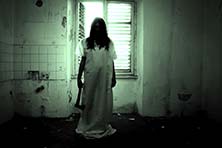
  • The girl on the curve (perhaps Spain’s most famous ghost story). A driver picks up a young woman who is hitchhiking late at night on a dark highway. The girl warns the driver to be careful going around the next curve, as it’s especially dangerous. The driver asks her how she knows this and she explains that she was killed on the curve. During her chilling response, the mysterious hitchhiker slowly vanishes into the air. They say that the legend originated in Illinois and later ended up reaching Spain in a time long before the internet existed.
  • Verónica Jaja: this is the Spanish version of the legend of “Bloody Mary”. According to this legend, if you close yourself in a dark room and repeat the name “Verónica Jaja” three times in front of a mirror, Miss Jaja will appear and will take your life. 
    urban legends
  • Rocafort subway station (Barcelona): they say that this station is haunted because it's the station with the most suicides and its cameras have registered strange movements after the train’s operating hours. Do the people who’ve helped spread the rumour know that long after the subway closes for the night, security and cleaning staff continue moving around the station?
  • Madrid’s subway rat: some say they’ve seen a rat in the subway lines of Spain’s capital that always chases the last train of the day. They say that this is the reincarnation of a passenger who fell on the tracks waiting for the same train. Clearly not a fun way to spend eternity.
  • The ghost of the nun of the University of Castile-La Mancha: the office of the president of this university, located in Ciudad Real, was once a shelter run by nuns. Some people say they’ve seen strange figures walking through the building’s corridors It seems that doors also inexplicably open and close by themselves.
Of course there are many more ghostly urban legends. Now it’s time for you to get out and discover some on your own... 

Sunday, 18 November 2018

A BIOGRAPHY


A biography, or simply bio, is a detailed description of a person's life. It involves more than just the basic facts like education, work, relationships, and death. It talks about a person's experience of these life events. Unlike a profile or curriculum vitae, a biography presents someone's life story, highlighting various aspects of his or her life, including intimate details of experience, and may include an analysis of the subject's personality.
Biographical works are usually non-fiction, but fiction can also be used to portray a person's life. 
An authorized biography is written with the permission, cooperation, and sometimes, participation of a subject or a subject's heirs. 
An autobiography is written by the person himself or herself, sometimes with the assistance of a collaborator.

Tuesday, 23 October 2018

MICHELIN STARS


CULTURE ZONE:  MICHELIN STARS

The term "Michelin Star" is a hallmark of the fine dining quality and restaurants around the world. 

Having a "Michelin Star" means your restaurant is one of the best in the country and even in the world. 

Do you know any Chef with any "Michelin Star"?

After having read this post, go back to your unit and complete the tasks. 


Sunday, 29 October 2017

HALLOWEEN TREASURE HUNT

WELCOME TO A HALLOWEEN TREASURE HUNT!!! ARE YOU READY TO START?


1. Before we start, let's revise some vocabulary!! Match the words to the pictures below.


2. Now it's time to start the treasure hunt!! First of all WORK IN PAIRS. Read the questions and click to find the answer.  GOOD LUCK!!


QUESTIONS
LINKS


3. After having completed the treasure hunt, what do you know now about Halloween? Do you celebrate it? 


Thursday, 19 October 2017

REPORTING VERBS 2nd Bachillerato

REPORTING VERBS:   Form and meaning

We use reporting verbs to report what someone said more accurately than using say and tell.

Verb + infinitive     agree, decide, offer, promise, refuse, threaten
(acceder (acordar), decidir, ofrecer, prometer, rechazar (negarse), amenazar)
• They agreed to meet on Friday.  (Accedió a quedar el viernes)

• He refused to take his coat off.  (Rechazó quitarse el abrigo)

Verb + object + infinitive
advise, encourage, invite, remind, warn, ask, order, tell
(aconsejar, animar, invitar, recordar, advertir, pedir, ordenar, decir)

• Tom advised me to go home early.  (Tom me aconsejó que me fuera a casa temprano)
• She reminded me to telephone my mother.  (Me recordó que llamara a mi madre)
Verb + gerund    deny, recommend, suggest, advise
(denegar, recomendar, sugerir, aconsejar)

• They recommended taking the bus.  (Ellos recomendaron coger el bus)
•
• She suggested meeting a little earlier.  (Sugirió quedar un poco más temprano)
•
Verb + object + preposition (+ gerund)     accuse, blame, congratulate
(acusar, culpar, felicitar)


• He accused me of taking the money.  ( Me acusó de coger dinero)
•
• They congratulated me on passing all my exams.  (Ellos me felicitaron por aprobar todos mis exámenes)
•

Verb + preposition + gerund     apologize (for), insist (on)
(disculparse, insister)


• They apologized for not coming.  (Ellos se disculparon por no venir)
•
• He insisted on having dinner.   (Insistió en cenar)
•
Verb + (that) + subject + verb
admit, agree, decide, deny, explain, insist, promise, recommend, suggest, apologize, say
(admitir, acceder (acordar), decidir, denegar, explicar, insistir, prometer, recomendar, sugerir, disculpar (sentir, lamentar), decir)


• Sarah decided (that) the house needed cleaning.  (Sarah decidió que la casa necesitaba limpiarse)
•
• They recommended (that) we take the bus. ( Ellos recomendaron que tomáramos el autobús)
•
Verb + object + (that) + subject + verb
tell,, inform, promise, remind, warn
(decir, informar, prometer, recordar, advertir)
He informed me that there was a lot of traffic.  (Me informó de que había mucho tráfico)

Verb + if / wh question
ask, want to know, wonder, enquire
(preguntar, querer saber, preguntarse, inquirir)
I wondered why they left the house at midnight. (Me pregunté por qué ellos abandonaron la casa a medianoche)
Verb + object + if / wh question      ask  (preguntar)
The teacher asked Mary if she had done her homework. (El profesor le preguntó a Mary si ella había hecho los deberes)


Video